
Mission
To advance fundamental knowledge of the near-Earth space environment, contribute to international space research, and uphold Bulgaria’s scientific heritage in space physics.
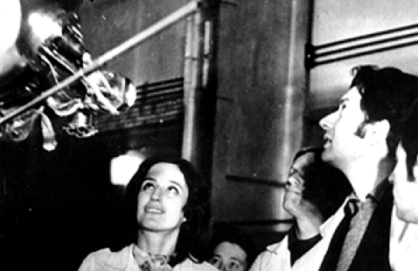
The Space Physics Department builds upon a strong scientific tradition established by its founders and early pioneers in Bulgarian space research.
Early developments in the Bulgarian space programme: Lead engineer Stefan Chapkanov and engineer Tania Ivanova at work on the first Bulgarian space instrument, the P-1, for the Interkosmos-8 mission.
Early Institutional Framework
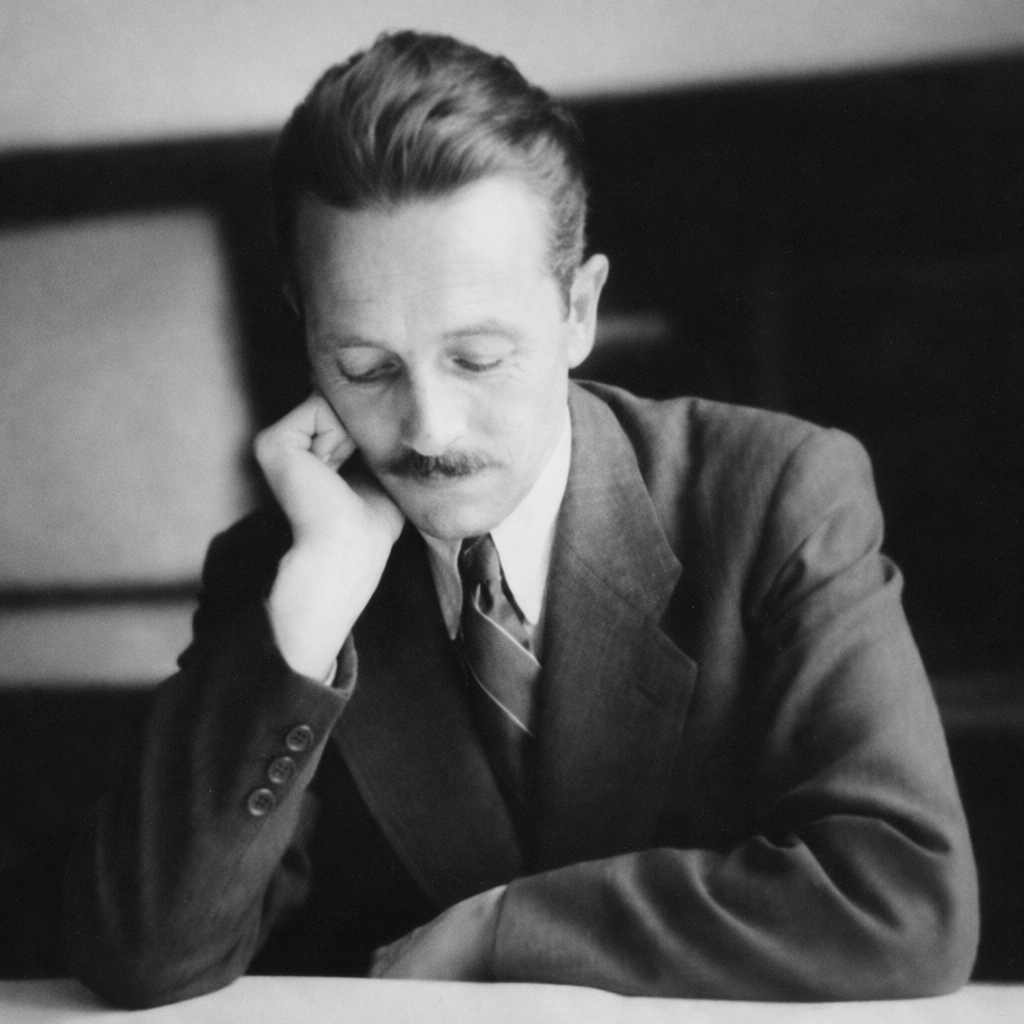
Lyubomir Krastanov, 1908–1977
Lyubomir Krastanov
In 1969, Lyubomir Krastanov provided the institutional framework for the emergence of space research in Bulgaria as an academic field. A Space Physics Group was established at the Geophysical Institute the same year and, in 1970, was transferred to the Presidium of the Academy, with Krastanov serving as its director until 1973.
The first members of the group included Maria Petrunova, Tania Ivanova, Stefan Chapkanov, and highly skilled technical specialists Georgi Karamishev and Georgi Sokolov. Administrative coordinator: Lidia Mehlemova.
Lyubomir Krastanov was born on 15 November 1908 in Pleven. He graduated in physics from Sofia University in 1931. In 1938, he obtained a PhD in physical sciences.
Founder of the Department
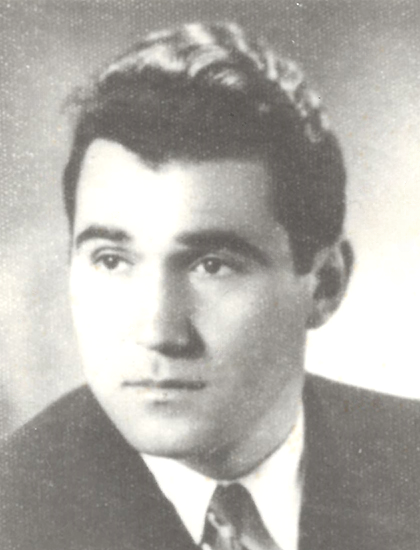
Kiril Serafimov, 1932–1993
Kiril Serafimov
Kiril Serafimov contributed to the institutional establishment of space science at the Bulgarian Academy of Sciences during its formative period, as well as to the development of its organizational and educational framework. His work encompassed research in ionospheric and magnetospheric physics, spaceborne instrumentation, and the analysis of satellite data. As Director of the Central Laboratory for Space Research (1974–1986), he oversaw Bulgaria’s participation in international scientific cooperation and satellite missions.
Kiril Borisov Serafimov was a Bulgarian physicist and Academician of the Bulgarian Academy of Sciences. He is widely associated with the early development of astronautics in Bulgaria. During the 1970s and 1980s he participated in international collaborative space research projects with both Soviet and Western scientific institutions.
With his tremendous activity in science and in life, Kiril Serafimov made many adversaries. Yet he extended a hand to everyone…
Kiril was entirely free of any form of grandiosity. He was both ordinary and extraordinary at the same time, with a remarkable ability to engage people, unite them, and combine scientific enthusiasm with pragmatic judgment.
He was an extraordinary individual, highly energetic and proverbially hardworking... He possessed an exceptional gift for expression and remarkable intellectual productivity – thousands of pages of scientific and public writing flowed from his pen.
The creative atmosphere established by the Institute's director, K. B. Serafimov, for the Bulgarian and Soviet participants in the project is difficult to overestimate even today.
Source: E. Kuzmin, К 45-летию Института космических исследований РАН. Обратный отсчет, Москва, 2010He was an energetic person with a generous spirit. A remarkable organizer. The ideological driving force on the Bulgarian side of the project.
Source: A. Larionov, К 45-летию Института космических исследований РАН. Обратный отсчет, Москва, 2010Legacy of Bulgarian Space Research
Selected instruments and space missions reflecting Bulgaria’s contributions to advancing space physics.
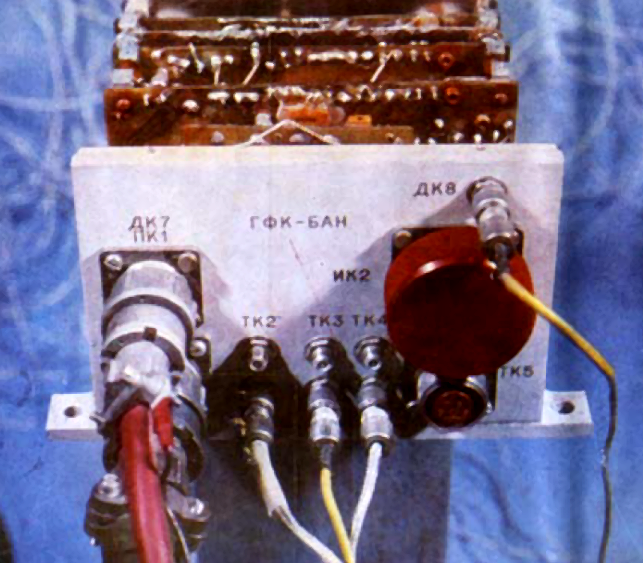
P-1 electronics unit
(1972)
Electronics unit, P-1 spaceborne instrument
The first Bulgarian scientific instrument, developed under the leadership of Stefan Chapkanov, was launched into Earth orbit on 30 November 1972 (23:49:57 EET).
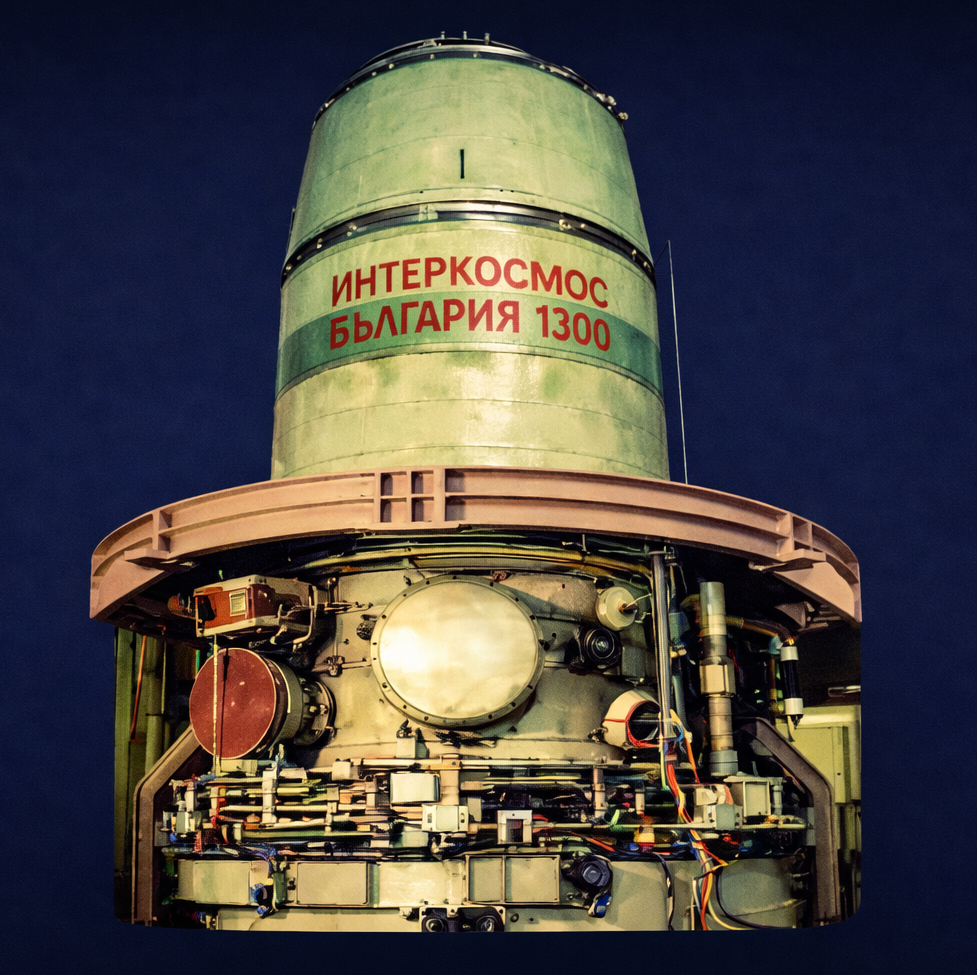
Bulgaria-1300 satellite
(1981)
Bulgaria-1300 satellite (1981)
The first Bulgarian satellite, launched in 1981, was equipped with scientific instruments developed by the department.
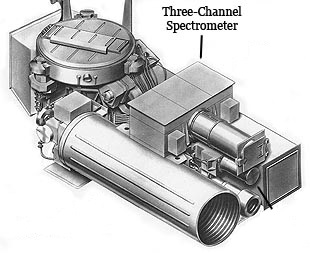
TKS instrument
Vega (1984–1986)
TKS instrument – Vega (1984–1986)
A three-channel spectrometer aboard the Vega spacecraft, developed with Bulgarian participation in international collaboration with France and Russia.
Image source: CNES
Books
The books present Bulgaria’s space achievements through scientific overview, personal testimony, and biobibliographic record, documenting both the history of national space research and the legacy of leading Bulgarian scientist Kiril Serafimov.
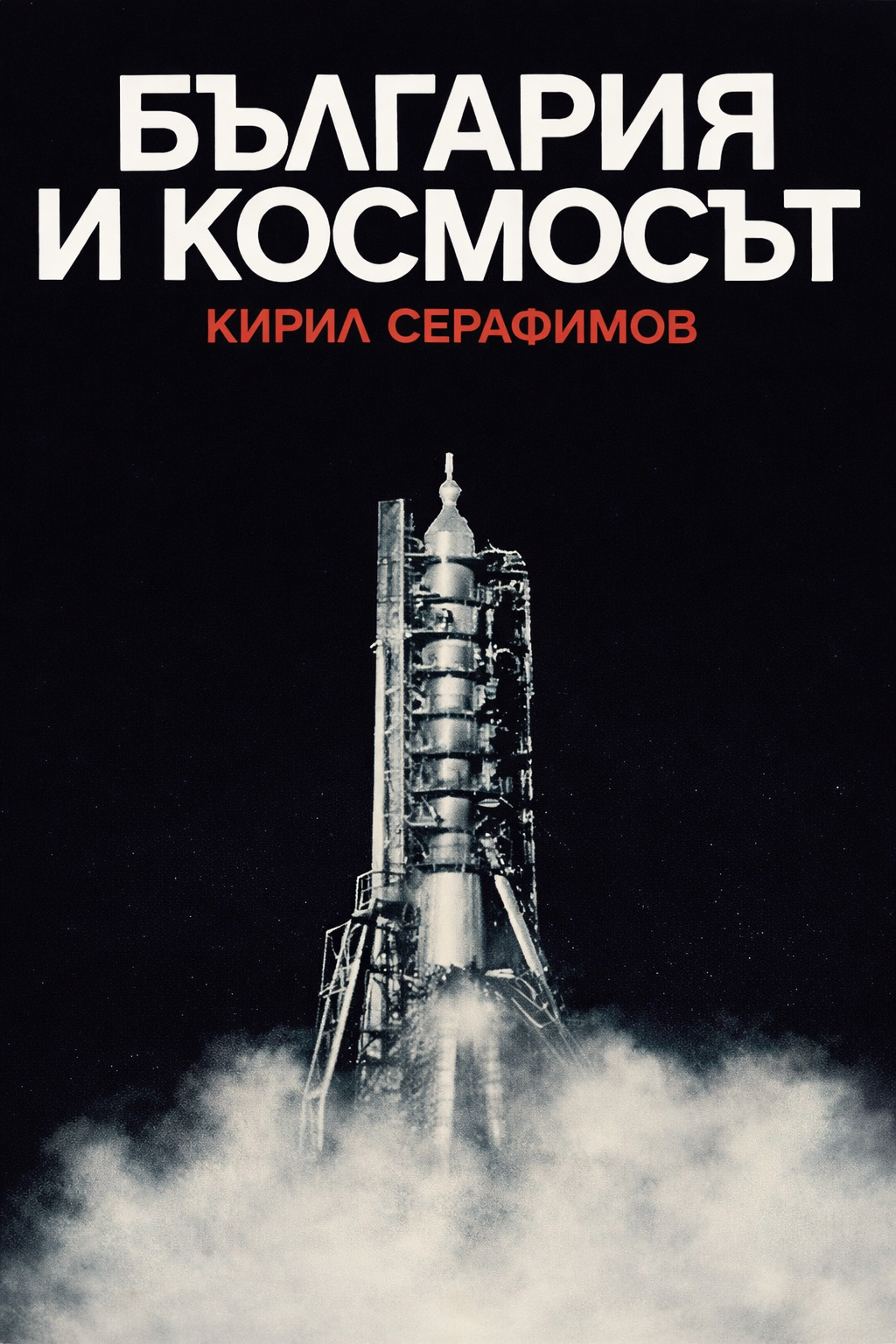
Bulgaria and Space
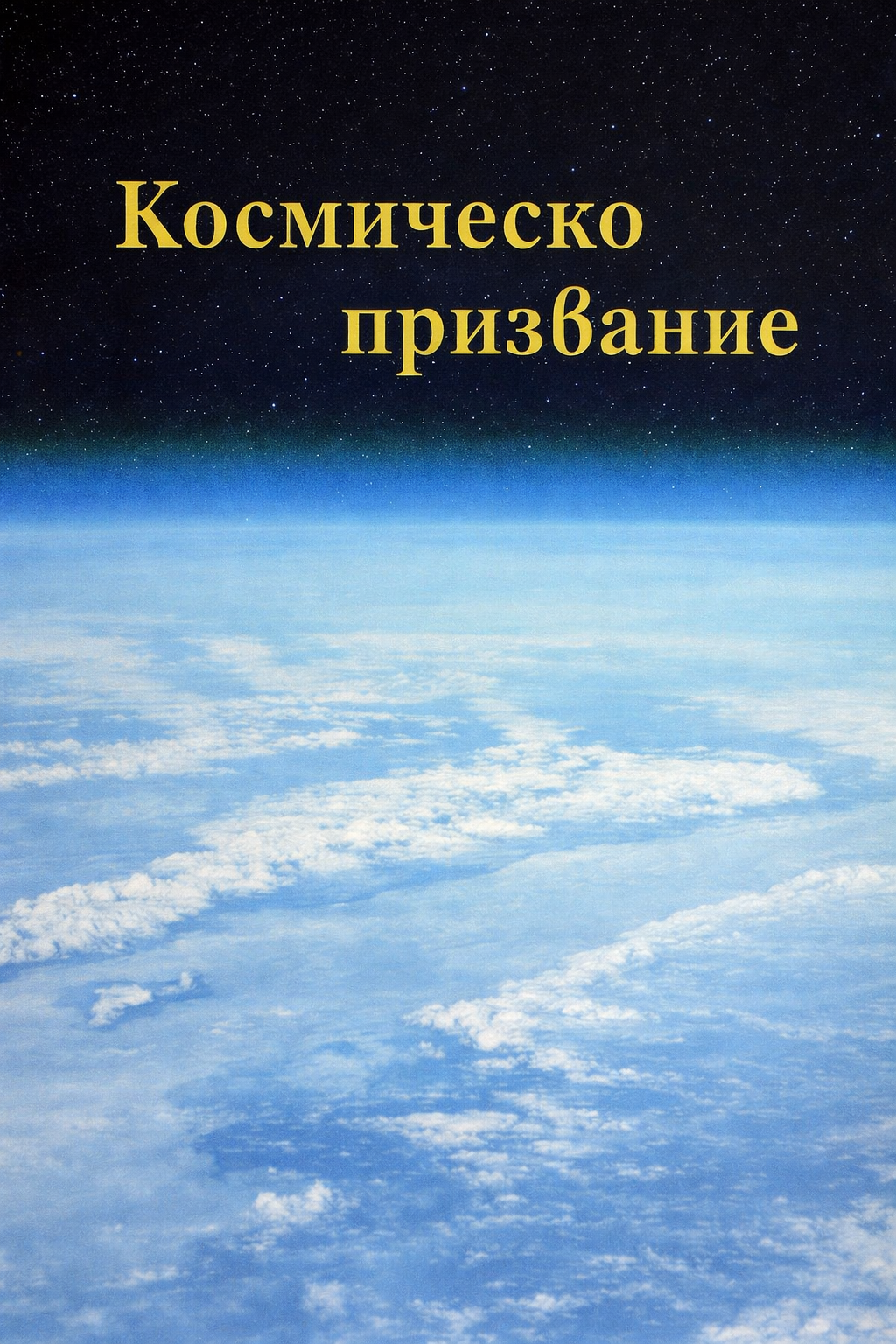
Cosmic Vocation
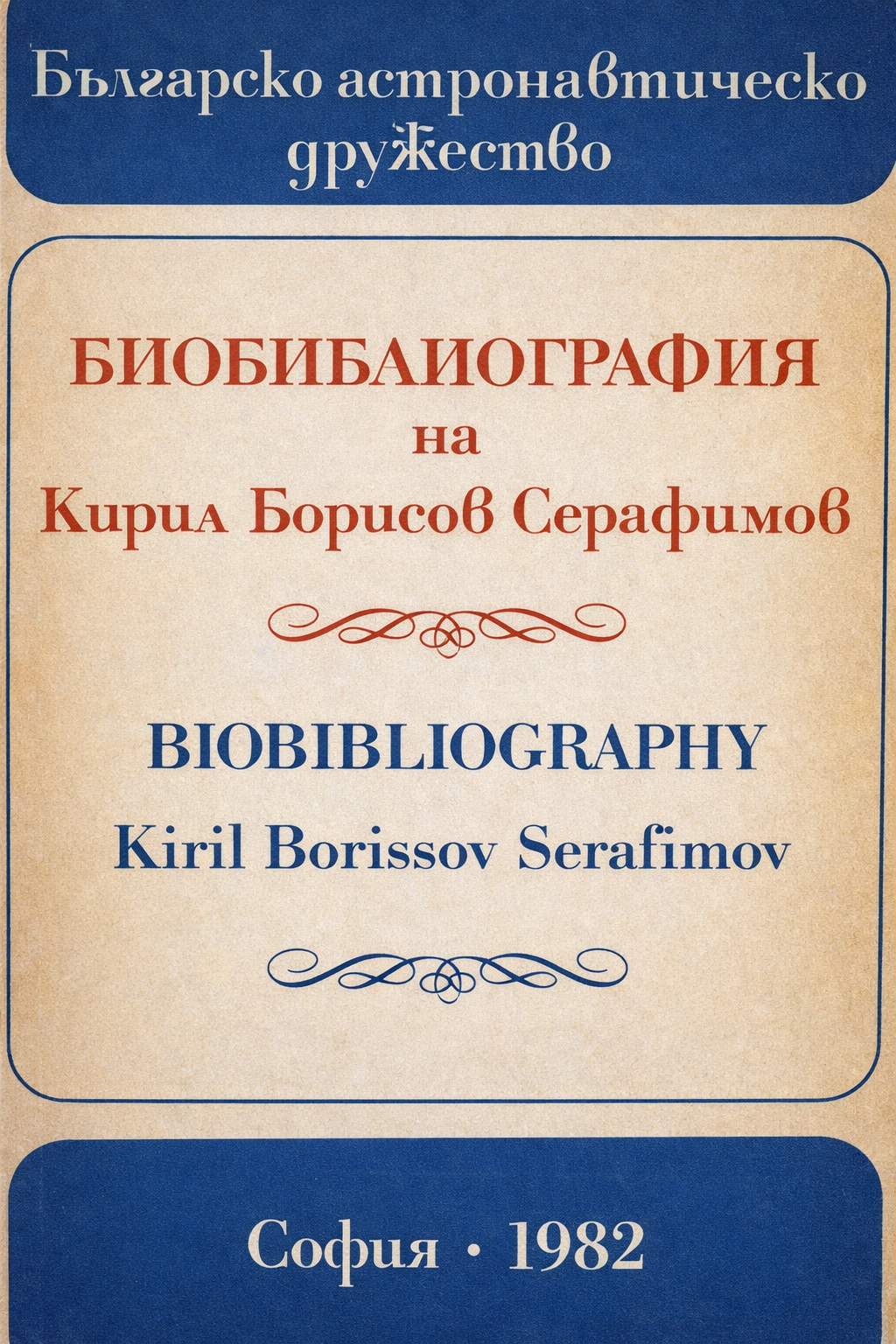
Biobibliography
Milestones
1969
- August – Establishment of the “Space Physics Group” within the Geophysical Institute, operating with an independent budget.
- 1 November – Appointment of the first research fellow, Stefan Chapkanov, following a competitive procedure.
1970
- 16 January – By Protocol No. 2, the group becomes an independent research unit under the Presidium of BAS, under the name “Scientific Group on Space Physics”.
1974
- 29 March – By Decision No. 6 of 29 March 1974 of the Presidium of the Bulgarian Academy of Sciences, the People’s Astronomical Observatory in Stara Zagora was designated as the base observatory of the “Scientific Group on Space Physics.”
- 28 June – By Decision of the Bureau of the Council of Ministers and the Presidium of the Bulgarian Academy of Sciences (BAS), the Central Laboratory for Space Research (CLSR-BAS) was established as a structural unit of the Academy.
1979
- 10 April – The first flight of a Bulgarian cosmonaut marked a milestone in the national space programme. The mission’s scientific programme was approved, and scientists from the Space Physics Department played a key role in the development of the spaceborne instruments.
1981
- 7 August – The Bulgaria-1300 satellite was successfully launched into a near-polar orbit. It carried a broad suite of scientific instruments developed at the Central Laboratory for Space Research, with contributions from the Space Physics Department.
1987
- 1 March – By Resolution No. 21 of 3 March 1987 of the Bureau of the Council of Ministers, the Central Laboratory for Space Research was reorganised into the Space Research Institute. The resolution was published in the State Gazette, No. 27, pp. 7–8, dated 7 April 1987.
1991
- 15 April – By Resolution No. 6 of 15 April 1991 of the Bureau of the Council of Ministers, the National Committee for the Research and Use of Outer Space at the Bulgarian Academy of Sciences, which oversaw the implementation of Bulgaria’s National Space Programme, was dissolved.
2010
- 23 March – By Decision of the General Assembly of BAS of 23 March 2010, the Solar–Terrestrial Influences Institute (STII) was merged with the Space Research Institute to form the Space and Solar–Terrestrial Research Institute (SSTRI). Several research units of STII were incorporated into SSTRI, including divisions in solar–terrestrial physics, space weather (later referred to as space climate after 2015), space geophysics, and remote sensing systems, as well as an Atmospheric Optical Investigations Department in Stara Zagora.
2012
- 9 January – By Decision of the General Assembly of BAS of 9 January 2012, the Space and Solar–Terrestrial Research Institute was renamed to the Space Research and Technology Institute (SRTI).
2015
- 30 April – By Decision of the Scientific Council of the Space Research and Technology Institute (Protocol No. 6 of 30 April 2015), the Space Geophysics Department was merged into the Space Physics Department. The Space Physics Department retained its name and structure, incorporating the Center for Space Weather and Space Climate Forecasting.
Today
- The Department continues its research in space plasma physics, cosmic radiation, and space weather, while maintaining its established scientific profile, expertise, and core competencies.
This timeline is supported by archival materials dated 1969, 1970, 1974, 1979, 1981, 1987, 1991, and 2010. Additional materials exist, and the collection continues to grow. If you possess relevant materials or information about their location, please contact us at buchvarova.astro@gmail.com.